The Executives Getting the Calls Are Not Applying More. They Stopped Applying Entirely.
Jun 26, 2026There is a statistic that should end the debate about executive job search strategy once and for all.
Referrals represent 7 percent of total job applications. They produce 40 percent of all hires.
Let that sit for a moment before reading further.
The same 7 percent of activity, pointed at a completely different strategy, produces forty percent of outcomes. Not a modest improvement. Not a marginal gain. A structural advantage that has nothing to do with the quality of the resume, the keywords in the profile, or the volume of applications submitted.
It has everything to do with presence.
The executives producing premium outcomes in the 2026 market are not running better versions of the conventional strategy. They have exited the conventional strategy entirely. They are present in the rooms, conversations, and relationships where the 80 percent of executive opportunities that never get posted are forming.
They are not applying. They are belonging.
The difference between those two things is the entire methodology.
THE FUNDAMENTAL PROBLEM WITH THE APPLICATION STRATEGY
The application strategy was built for a market that no longer exists.
In that market, the job board was the discovery mechanism. Employers posted. Candidates found. The matching happened through volume and screening. The executive with the best-formatted document and the highest keyword density got the call.
That market is gone. Three forces dismantled it.
First, AI raised the floor of document quality for every executive simultaneously. Every resume is now keyword-optimized. Every LinkedIn profile is now professionally formatted. Every covering communication is polished by the same tools everyone else is using. When everyone has the same quality floor, quality at the floor stops being a differentiator. The documents have become uniform. Invisible.
Second, 83 percent of applications are screened by AI before a human reads a single word. The executive who spent two hours crafting the perfect application did not get rejected by a human being. They were filtered by an algorithm that had no awareness of the judgment they carry, the relationships they have built, or the specific expensive problem they are irreplaceable at solving.
Third, we are in the Trust Recession. AI has flooded every channel with polished profiles that look impressive and reveal nothing real. Decision-makers at the senior level have responded by getting skeptical, getting slow, and getting deeply reliant on trusted referrals over any form of cold contact. They want to see someone operate before they commit. They want substance over surface. They want to already know, from multiple exposures in real contexts, that the person is who they say they are.
The result of all three forces is the same.
The cold application success rate at the executive level in 2026 is 0.1 percent. For every 1,000 applications, roughly one produces a closing conversation.
The executives still running the application strategy are working hard inside a system with a 0.1 percent success rate and interpreting the silence as information about their value.
It is not. It is information about the market they are competing in.
WHAT BELONGING ACTUALLY MEANS
The word belonging is chosen deliberately because it describes something precise.
It is not networking. Networking, as most executives have experienced it, is organized around what you can extract. Attending events with business cards. Collecting LinkedIn connections. Making introductory calls with an unstated agenda of being helped. The underlying energy is need-based. And in the Trust Recession, decision-makers with real pattern recognition built over decades of consequential decisions feel that energy immediately.
It turns them away rather than toward.
Belonging is different in kind, not just in degree.
It is the state of being genuinely present in the conversations where the problems you solve are being discussed, where the decisions are being formed, and where the trust that produces referrals and introductions is being built, before there is anything specific to ask for.
It is showing up as a peer, not as a candidate.
It is asking questions about their world because you are genuinely curious about it, not because you are trying to find an opening.
It is contributing perspective that demonstrates, without claiming, that you have been inside the problem they are navigating and have specific, useful thoughts about it.
It is what Amy France described when she had a conversation with a CEO who had been in his role for about a year. No job posted. No formal process. She talked with him the way she would talk with a peer. Asked what he was finding in his transition into the C-suite. Where he was seeing progress and where he was seeing friction.
She was treating it as a practice run. He experienced it as the most authentic executive conversation he had in the entire search process.
"You really can't fake energy," she said afterward. "These are highly sophisticated buyers. They will feel it a mile away."
That conversation was not an application. It was belonging in a room with someone who had a problem she understood. And the quality of that belonging, the genuine curiosity, the peer-level presence, the substance that cannot be manufactured, was visible to him in a way no document could produce.
THE HIDDEN MARKET IS NOT A PLACE
One of the most persistent misconceptions about the executive opportunity market is that the hidden market is a location, a resource, a system that can be accessed if you know the password.
It is not.
The hidden market is the ongoing, dynamic flow of problems and conversations that happens between senior leaders who trust each other.
Role conversations that happen long before any job description is written. Fractional engagements co-designed in a meeting between two leaders solving an immediate problem. Equity partnerships built between a founder and an operator who recognize each other in a single conversation. Advisory introductions that happen because a board member trusts another board member's recommendation.
None of that is searchable. None of it is on a job board. None of it finds the executive because their profile is keyword-optimized.
All of it lives inside relationships.
This is not an abstract principle. It is the mechanics of how opportunities actually form at the senior level. And the executives who understand it structurally, rather than aspirationally, are the ones who build the practices that access it.
Referrals are 7 percent of total applications and produce 40 percent of all hires because the relationship that produces the referral is doing work that no application can do.
It is delivering trust. Proof of character. Demonstrated value. A known quantity that removes the risk a hiring decision at the executive level always carries.
The executive who is referred by someone the decision-maker trusts walks into the room with a presumption of fit that a cold applicant spends the entire process trying to build from scratch.
That asymmetry is the entire argument for belonging over applying.
HOW BELONGING IS BUILT: THE CONSISTENT CONNECTION STRATEGY
The Consistent Connection Strategy is The Career Evolved Method's proprietary framework for building presence in the hidden market systematically.
The mechanics are specific because specificity is what produces results.
Thirty minutes per day. Not two hours on Monday and nothing the rest of the week. Thirty minutes, every day, as a non-negotiable daily practice. The consistency is what produces compounding.
Five to ten intentional outreach conversations per week. Not connection requests. Not mass messages. Not generic engagement with content. Specific, value-led contact with the specific decision-makers who have the expensive problems the executive solves.
Every message ends with a genuine question about the other person's world. Not about the executive's availability. Not about whether there are any openings. A real question about their thinking, their challenges, their perspective on something that only they can answer from their specific vantage point. This creates conversational weight rather than transactional contact.
Value is delivered before anything is asked. The executive shares relevant thinking, makes an introduction that benefits the decision-maker, or asks a question that helps the decision-maker think more clearly about something they care about. The relationship is invested in before it is drawn from.
Sustained over ninety days with twenty-five to thirty relevant decision-makers, this practice builds something the application strategy cannot produce.
A pipeline of warm relationships where the executive's name is the first one spoken when a problem becomes urgent enough to act on.
The community that formed around Career Evolved demonstrates how this compounds in practice. Ololade's experience is the most precise illustration available.
Two separate community members made two separate introductions to two separate decision-makers. Neither introduction was requested. Both came because the community members had experienced Ololade's presence in conversations and were moved to put her in front of people they trusted. A long-term consulting contract closed as a direct result. Two introductions. Two relationships. One outcome that the application strategy would never have produced.
That is what belonging looks like when it reaches the stage of compounding.
THE SIGNAL THAT BELONGING HAS BEEN ESTABLISHED
There is a moment, described consistently across the senior executives who have gone through The Career Evolved Method, when the quality of market conversation changes.
The decision-maker stops scanning the executive's background and starts describing their own situation. They lean forward. They ask different questions. They start saying things like: you've seen this before, haven't you? And the answer is yes, and the conversation shifts from evaluation to partnership.
That moment cannot be manufactured. It cannot be produced by a better resume or a more optimized profile. It is the natural outcome of an executive who has spent months building genuine presence in the right conversations and who walks into the room as a known quantity rather than a stranger applying for consideration.
The buyer has already decided before the formal process begins. Because the relationship that preceded the room did the work the room is supposed to do.
This is not a theory about how relationships work. It is the consistently observed outcome of the Consistent Connection Strategy applied fully.
Calvin Williams received a VP offer directly from a CEO for a role that was never posted. The offer came through a conversation, not an application, because the relationship had already established what the role would require the hiring process to discover.
Adi spent months building conversations with department heads at Vanguard about the specific physical security problem he was built to solve. Vanguard created a role that had not previously existed. The role was not a match to a job description he had applied for. It was a reflection of the value he had demonstrated in belonging to the right conversations before the role existed.
Philip stopped describing his background in closing conversations and started describing his specific point of view on the digital transformation problem his target organizations were navigating. A company created a role around that perspective because his presence in conversations had already demonstrated what his profile alone never could.
WHY THIS MATTERS MORE IN Q3 THAN IT DID IN Q2
Four days remain in Q2 of 2026.
897 professional jobs are being eliminated every day. The posted market is contracting. The Trust Recession is deepening as AI flooding continues to erode the signal value of polished profiles.
The executives who spent Q2 in the application strategy are entering Q3 with a thinner pipeline than they deserve and a growing suspicion that the problem is them rather than the system they have been working inside.
It is not them. It is the system.
Q3 starts on Tuesday July 1.
The executives who enter Q3 with a fundamentally different practice, thirty minutes per day, five to ten intentional conversations per week, value first in every contact, genuine presence in the conversations where the decisions are forming, are building something that compounds differently from anything the application strategy produces.
The referral stat is not an accident. It is the consistent output of executives who stopped applying into a system with a 0.1 percent success rate and started building the relationships that produce forty percent of all outcomes.
The question worth asking before Tuesday is simple.
Which statistic will describe your Q3?
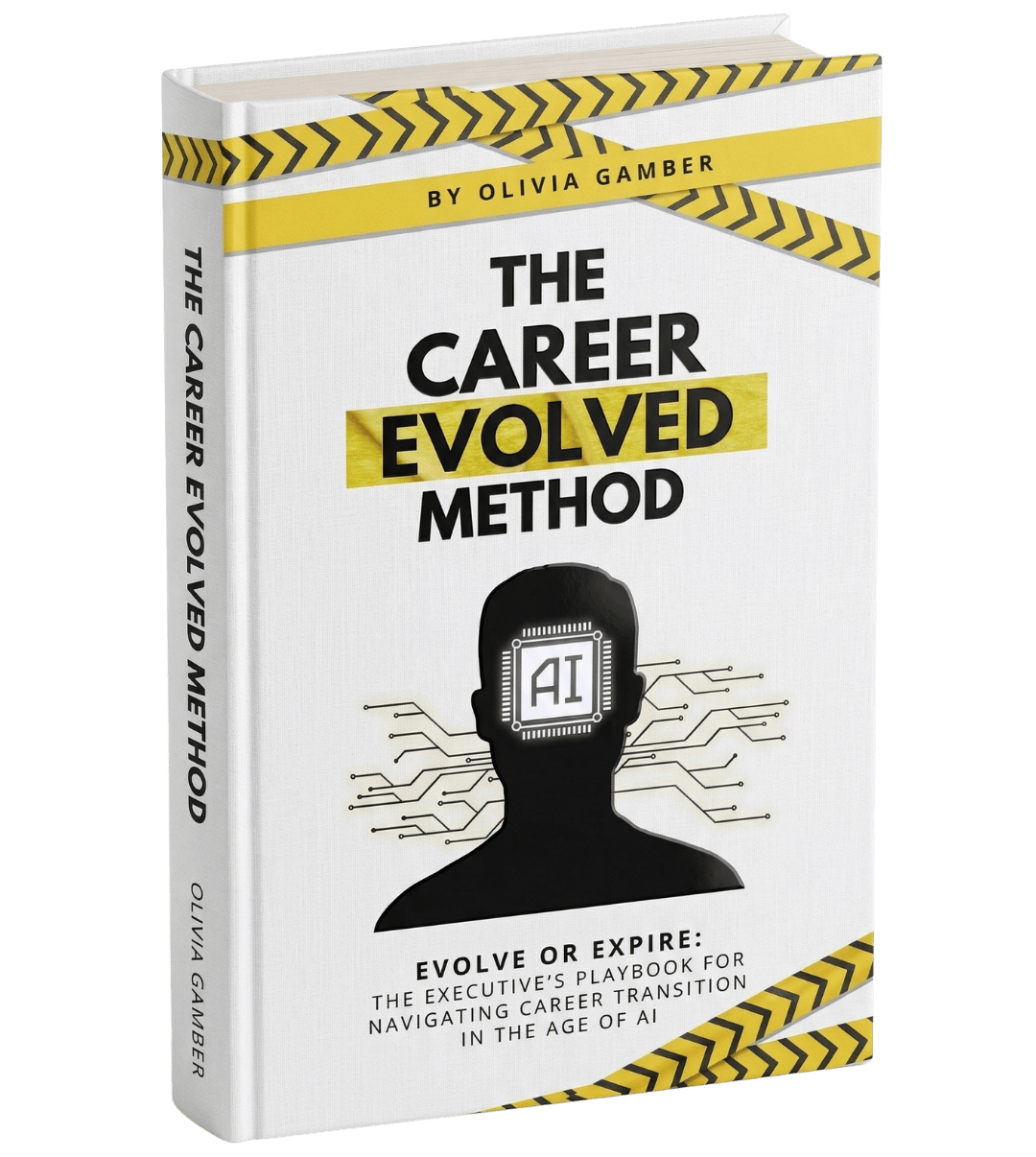
📥 Download The Career Evolved Method™ free at www.careerevolved.com/thecareerevolvedmethod
Book your free 20-minute diagnostic at www.careerevolved.com/schedule
Career Evolved is an executive transformation company built around The Career Evolved Method™, an eight-pillar framework created by Olivia Gamber. The methodology has produced outcomes including a VP offer delivered directly from a CEO following a single conversation, a role created at Vanguard for an executive with 30 years of experience, and a long-term consulting contract closed through two community-sourced introductions in the same week. The free framework is available at careerevolved.com/thecareerevolvedmethod.
#CareerEvolved #CareerEvolvedMethod #ConsistentConnectionStrategy #HiddenMarket #ExecutiveLeadership #TrustRecession #ExecutiveMindset #EvolveOrExpire #PremiumProduct #OliviaGamber #WalkAwayPower #ExecutivePositioning #ExecutiveCoaching #CareerEvolvedReviews