The Career Evolved Program: What It Is, What It Teaches, and Who It Works For (2026)
Jun 19, 2026Complete breakdown of the Career Evolved program. Eight pillars, specific frameworks, named client outcomes, and honest account of who produces results and who does not.
What You Are Actually Buying When You Choose Career Evolved
Most executives who research Career Evolved before deciding want to understand one thing before anything else.
What is actually in the program?
Not the philosophy. Not the testimonials. Not the brand language. What are the specific frameworks, what does the daily practice look like, what does the work actually require, and how do the pieces connect to produce the outcomes that get described.
This article answers that question completely.
The Foundation: Why the Program Starts Where It Does
Every conventional executive career program starts at the document. The resume, the LinkedIn profile, the outreach templates. The career-facing surface.
The Career Evolved Method starts somewhere different.
It starts at the belief system that is setting the ceiling on every result the executive has been producing.
This is not a philosophy choice. It is an observation built from a decade of working directly with senior executives and watching the same pattern repeat.
Executives who rebuild the document without rebuilding the belief system underneath it produce modest results. They show up to closing conversations with better positioning language and the same internal uncertainty. Buyers feel the uncertainty. Terms reflect it.
Executives who do the identity work first, who genuinely rebuild what they believe they are worth and what they are willing to ask for, produce categorically different results. Not because the tactics changed. Because the foundation those tactics are sitting on changed.
The Career Evolved Method is built on that observation. Every pillar flows from it.
The Eight Pillars: What Each One Actually Does
Pillar 1: Premium Product Identity
The foundational shift. From candidate to premium product.
A candidate is competing for attention inside a system designed to filter candidates. A premium product is an executive with irreplaceable value choosing where that value goes.
These are not the same posture. And the market responds to them differently before a single word of outreach is written.
The work in this pillar is specific. What is the irreplaceable value you carry? What has been obscuring it? What specific expensive problem have you solved repeatedly that organizations would pay significantly to solve right now? What does it cost them when that problem goes unsolved?
The answers to those questions form the foundation that every other pillar builds on.
Grace received a $510,000 offer after making this shift. The role was never posted. The offer came because she entered every conversation already knowing what problem she solved and what it cost the organization when it went unsolved.
Pillar 2: Identity of the Top Ten Percent
The specific beliefs, habits, and values that produce outcomes at the highest level are learnable and buildable. This pillar does that work.
The four identity traps that most executives are running without knowing it: background as identity, organization as stability, age as a limit, and the belief that they should not have to do this work.
95 percent of limiting beliefs are unconscious. The ceiling on results that feels like a market problem is almost always an internal problem that the market is simply reflecting back.
This pillar is the honest examination of which of those traps is running and what replacing it actually looks like.
Pillar 3: Top Ten Percent Habits
AI literacy, strategic relationship building, and continuous learning made into daily practice rather than aspirational goals.
In a market where AI is replacing the tactical layers of executive work and raising the floor of document quality simultaneously, the executives who differentiate themselves are the ones who use AI as a tool rather than treat it as a threat or ignore it entirely.
This pillar builds the daily practices that keep an executive operating at the level the hidden market is watching for.
Pillar 4: Solution-First Positioning
The single most impactful tactical shift in the entire methodology.
Background-first positioning leads with where you have been. It invites comparison to every other executive with similar history. It asks the buyer to do the work of connecting your background to their need.
Solution-first positioning leads with the specific expensive problem you solve. It names what it costs the organization when that problem goes unsolved. It makes the connection between the buyer's pain and the executive's capability immediate, specific, and visceral.
The difference in practice:
Background-first: "Senior Vice President of Operations with eighteen years of experience managing complex supply chain environments across Fortune 500 and high-growth organizations."
Solution-first: "I work with mid-market companies that are scaling faster than their operations infrastructure can support. That gap typically costs fifteen to twenty points of margin annually. I close it."
The first sentence describes a person. The second describes a solution to an expensive problem.
Decision-makers at the C-suite level scan for one thing when they evaluate a senior executive. Does this person understand my problem? The second version answers that question before it is asked. The first does not answer it at all.
Philip stopped describing his background and started describing his point of view. A company created a role for him that had never existed before.
Pillar 5: The Consistent Connection Strategy
The hidden market access mechanism. The most important daily practice in the methodology.
80 percent of executive opportunities are never posted publicly. They live in conversations between decision-makers about problems they need solved before a role is ever formalized. The executives who are inside those conversations when urgency creates the opening get the opportunities. The executives who are not, do not.
The Consistent Connection Strategy builds presence in those conversations systematically.
30 minutes per day. Five to ten intentional, value-led outreach conversations per week with the specific decision-makers who have the expensive problems you solve. Every message ends with a specific question only that person can answer. Never a calendar request. Never a pitch.
Sustained over 90 days with 25 to 30 relevant decision-makers, the practice builds a pipeline of warm relationships where the executive's name is the first one spoken when a problem becomes urgent enough to act on.
Calvin Williams received a VP offer directly from a CEO for a role never posted publicly. That is the Consistent Connection Strategy producing the outcome it is designed to produce.
Randy was told to lower her expectations. She ran the Consistent Connection Strategy instead. Multiple VP-level opportunities followed, almost none of them posted.
Pillar 6: The Doctor Framework
The closing conversation methodology. The most important framework for what happens when the Consistent Connection Strategy produces an opening.
Executives who close at the C-suite level do not pitch themselves. They diagnose.
They enter every conversation already knowing the specific expensive problem the buyer is facing. They ask the questions that make the buyer feel genuinely understood in a way they have not felt with other executives they have spoken to. They name the problem back to the buyer with the precision of someone who has been inside it before.
Then, and only then, they prescribe themselves as the specific, irreplaceable solution.
The framework is called the Doctor Framework because it mirrors the physician model. A doctor does not walk into an examination room and recite their credentials. They ask questions. They listen. They diagnose. Then they prescribe.
An executive running the Doctor Framework does not walk into a closing conversation and recite their background. They ask questions. They listen. They name the problem. Then they position.
Amy France described running the Doctor Framework in a recorded closing conversation. The patriarch of the family-owned business watched the recording multiple times before he ever met her in person. He had already decided before she walked in.
Pillar 7: Walk Away Power
The negotiation identity pillar. The most financially impactful single element for most executives.
Walk Away Power is not a script. It is not a tactic. It is the settled internal certainty that the ask is right and this specific outcome is not the only option.
It is built before the negotiation conversation, through the Consistent Connection Strategy. When an executive has five conversations running simultaneously, when they are not emotionally attached to any single outcome, when they know the cost of the problem they solve and they have the identity foundation that supports pricing it correctly, the first offer stops feeling like rescue.
It starts feeling like an opening bid.
Every word, every tone, and every ask at the table changes when that internal state changes.
Val negotiated $30,000 above the original offer. After more than a year of searching and coming in depleted, he rebuilt what he understood about his value and held his number without flinching.
"I understand my value in a way I probably did not before."
James walked away with four simultaneous executive offers and chose based on alignment, not urgency.
Pillar 8: The Permanent Practice
The most important and most underrated pillar.
Career management is not a crisis response. It is a permanent discipline.
The executives who are never disrupted by market shifts, by restructurings, by industry changes, by AI displacement, are the ones who never stopped building relationship capital between disruptions. The Consistent Connection Strategy does not stop when an opportunity is secured. 30 minutes per day continues. The pipeline continues to compound. The relationship capital continues to build.
The executives who finish the methodology and stop building are the ones who end up back in the same position three years later when the market shifts again.
The executives who install the permanent practice end up with careers that look fundamentally different from the executives around them. Not because they got lucky at the next disruption. Because they were already positioned for it.
The Community: What It Actually Does
The Career Evolved community is not a LinkedIn group or a weekly Zoom call.
It is a network of senior executives who actively move opportunities to each other because every member is trained to operate as a premium product and lead with value.
Ololade's experience demonstrates how it works at its best. Ryan Meinberg, a Career Evolved team member, introduced her to Ernie, a community member who had navigated a similar transition. Ernie referred her. Separately, Matt Stuckey, another community member, introduced her to a decision-maker who was so aligned that they closed a long-term consulting contract while the decision-maker was on vacation in Italy.
Two community-sourced introductions. Two different executives. Two different decision-makers. One long-term consulting contract closed.
That is what a real executive network looks like when every member is trained to lead with value rather than take with need.
Who Produces Results in the Program
The executives who produce the strongest outcomes from Career Evolved share a specific profile.
They do the identity work honestly. Not around it. Through it. They are willing to examine what has been setting the ceiling on their outcomes rather than looking only for better tactics.
They run the Consistent Connection Strategy consistently. 30 minutes per day is not negotiable. The pipeline compounds. The executives who skip days produce results that reflect the skipping.
They apply the Doctor Framework in real conversations. Not in rehearsal. In actual closing conversations with real decision-makers. The framework only produces outcomes when it is used.
They build Walk Away Power before they need it. Not after an offer arrives and they realize they have no leverage. Before.
And they install the permanent practice rather than treating the methodology as something to do until the next role is secured.
Who Does Not Produce Results
Executives who want the work done for them. Career Evolved is done with you. Not for you. There is no passive path through the methodology.
Executives who skip the identity work and go straight to tactics. This is the most common pattern that produces disappointment. The tactics without the identity foundation hit the same ceiling they were hitting before.
Executives looking for placement in 60 days. The Consistent Connection Strategy produces early traction in 30 to 60 days. The deeper outcomes take the time they take.
Executives who are not targeting $150,000 to $500,000 and above. The methodology is calibrated for that market.
The Free Starting Point
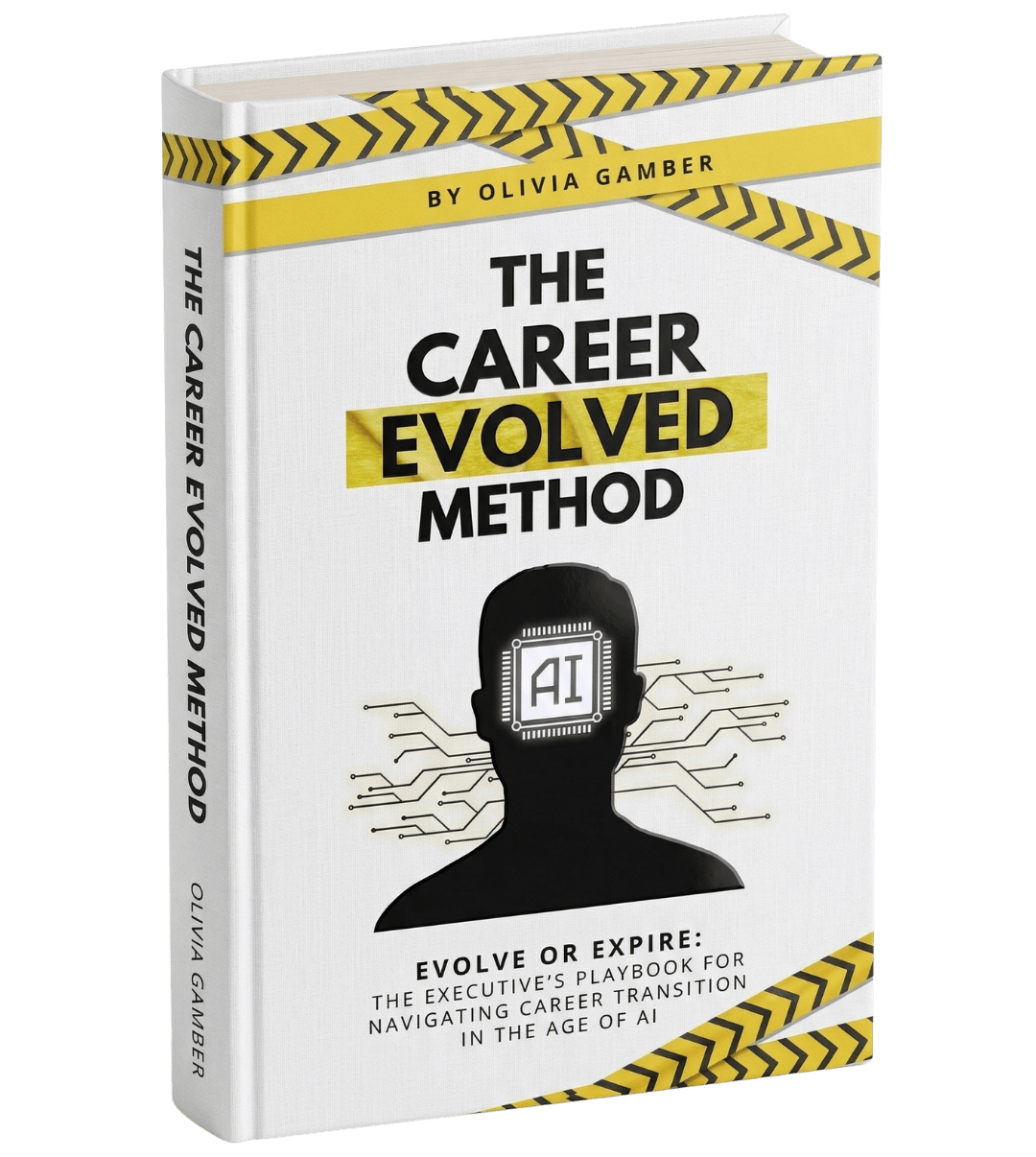
The Career Evolved Method, the complete eight-pillar framework, is available for free at careerevolved.com/thecareerevolvedmethod.
This is the full methodology in book form. All eight pillars. All the frameworks named on this page. Read it. Evaluate the quality of the thinking. Decide from there.
If it resonates with where you are and what you are navigating, the next step is a real 20-minute diagnostic conversation about your specific situation.
Not a sales call. A diagnostic. You will leave with more clarity about your situation than you arrived with regardless of what you decide.
Frequently Asked Questions
What is the Career Evolved program?
The Career Evolved program is The Career Evolved Method, an eight-pillar executive transformation framework. The eight pillars cover identity work, solution-first positioning, the Consistent Connection Strategy for hidden market access, the Doctor Framework for closing conversations, Walk Away Power for negotiation, and the permanent practice. Available free at careerevolved.com/thecareerevolvedmethod.
What is the Doctor Framework?
The proprietary closing conversation methodology. Diagnose before you prescribe. Enter every conversation already knowing the buyer's problem. Ask the questions that make the buyer feel understood. Then position as the specific, irreplaceable solution. Executives who apply it report that closings happen faster and at higher compensation.
What is the Consistent Connection Strategy?
The hidden market access methodology. 30 minutes per day. Five to ten value-led outreach conversations per week with the specific decision-makers who have the problems you solve. Every message ends with a real question, never a pitch. Sustained over 90 days, it builds the pipeline that produces opportunities before they are ever posted.
What is Walk Away Power?
The settled internal certainty that the ask is right and this outcome is not the only option. Built before the negotiation through multiple simultaneous conversations. When an executive has genuine options, the entire dynamic at the table changes.
What is solution-first positioning?
Leading with the specific expensive problem you solve instead of your background. The shift that makes decision-makers feel understood before a question is asked.
Download The Career Evolved Method Free: careerevolved.com/thecareerevolvedmethod
Book Your Free 20-Minute Diagnostic: careerevolved.com/schedule
See All Client Results: careerevolved.com/results