She Wrote "I Wish They Knew How Capable I Am." I Want to Talk About That Sentence.
Jun 24, 2026By Olivia Gamber, Founder & CEO of Career Evolved
A Business Insider headline today stopped me cold.
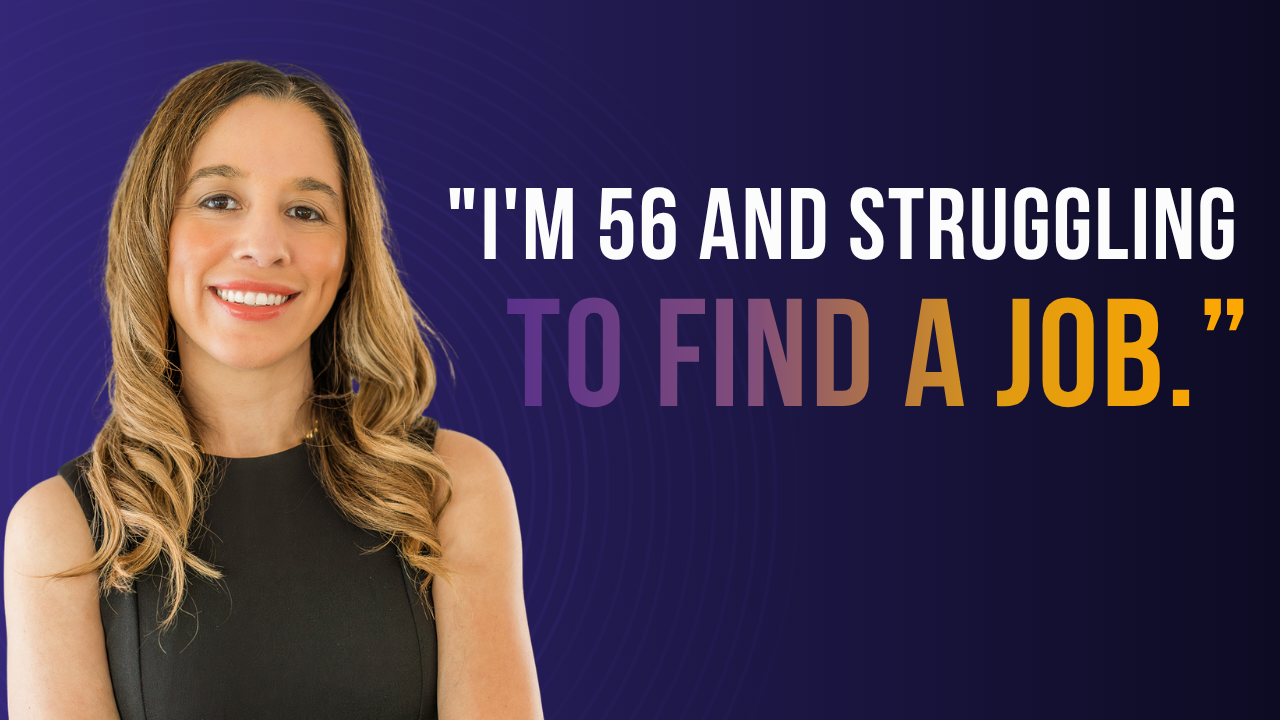
"I'm 56 and struggling to find a job. I think employers can sense my desperation, but I wish they knew how capable I am."
I want to sit with that sentence for a minute.
Not as a market observer. As someone who has been on the phone with the person who wrote it, in a different form, hundreds of times.
Because that sentence contains something profound that the professional development industry never names honestly.
It contains two things at war with each other.
The knowing, "I am capable," and the fear, "they cannot see it."
And the heartbreaking assumption underneath both of them: that the problem is on the employer's side. That if they just looked more carefully, they would see what she knows about herself.
I want to challenge that assumption with the deepest possible respect for every executive who is living inside that sentence right now.
The problem is not that they cannot see it.
The problem is that capability, genuine, irreplaceable, hard-won capability, has been buried underneath the energy of desperation.
And desperation is the one thing in a market built on trust that makes decision-makers move away rather than toward.
What desperation actually is
I want to be clear about something because this is where the professional development industry gets it wrong almost every time.
Desperation is not a character flaw. It is not a weakness. It is not evidence that an executive is not cut out for this market.
Desperation is what happens when someone with genuine capability has been running the wrong strategy for long enough that the silence of the market has started to narrate something about their worth.
The executive who has been submitting applications for eight months. Following up professionally. Optimizing the profile. Attending the networking events. Doing everything the industry told them to do.
And hearing nothing back.
At some point, the silence stops feeling like a strategy problem and starts feeling like a verdict.
And the moment it starts feeling like a verdict, it shows up in the energy of every conversation. Not in the words. Not in the preparation. In the room.
Buyers feel it. They cannot always name it. But they feel it. And at the executive level, where decisions involve significant financial and organizational stakes, they respond to it by slowing down, pulling back, and eventually passing.
Not because the executive is not capable.
Because the energy underneath the capability is communicating something the capability is trying to overcome.
The market is not reading your qualifications first
Here is the market reality that the executive in that headline deserves to hear.
Decision-makers at the senior level are not primarily evaluating credentials in the first conversation. They are evaluating presence. The quality of the energy in the room. The settled certainty of someone who knows exactly what they carry and is not performing to prove it.
Amy France knows this now. She came to Career Evolved after 13 years as SVP of Operations, navigating what she describes as one of the toughest markets in a decade. On our early calls, she could not fully articulate what she wanted. Not because she did not know. Because the market's silence had done what prolonged silence does to people who built their identity on being the one who delivers.
She did the identity work. Not the outreach. Not the document. The honest, sometimes uncomfortable, excavation of who she was outside the organizations and titles that had held her.
And when she walked back into rooms as that person, fully present, fully certain, leading with what she solved rather than what she had held, everything changed.
Head of Operations at one of the top ten employers in the country. Team of 300 people. Her description of where she is now: light and joyful.
Not because the market suddenly recognized her qualifications.
Because the energy matched the capability.
The three things desperation does that capability cannot overcome
I want to name these specifically because most coaches skip past them into tactics, and the tactics never fully land until these are addressed.
First: desperation narrows the ask.
The executive who is operating from a place of urgency accepts offers they should not accept. Not because they are foolish. Because the weight of the search has slowly eroded the internal standard of what is reasonable to want. The ask that felt right at month one feels risky at month eight. So the number goes down. The criteria get softer. The tolerance for misalignment goes up.
And the market reads that erosion before it produces a number. It reads it in how the executive holds the conversation.
Second: desperation shows up before words do.
This is the one that costs the most. The executive who is internally negotiating their own worth before they walk in the door is bringing a divided energy into every room. Part of them is trying to demonstrate value. Part of them is quietly hoping to be chosen.
Buyers feel the division. They interpret it as uncertainty. Uncertainty at the executive level is expensive. Expensive decisions require certainty. So they pass.
Third: desperation shrinks the market.
The executive operating from urgency stops doing the long-game work. The relationship building that has no obvious immediate return. The outreach that will compound in three months but feels pointless when the bank account is the primary variable. The identity work that takes time and produces no immediate external signal.
All of the work that builds Walk Away Power gets deprioritized. And without Walk Away Power, every conversation happens from a position of need rather than a position of choice.
And buyers can smell the difference between those two postures from across a video call.
What she actually needs, and what the industry will not say
The executive in that headline does not need better keywords. She does not need a more optimized profile. She does not need a stronger pitch for why her 56 years of accumulated judgment is just as valuable as someone younger.
She needs the identity work that rebuilds what she believes about her value before the market has the chance to narrate it for her.
She needs a strategy that stops competing in the posted market with a 0.1 percent success rate and starts accessing the hidden market where 80 percent of the real opportunities live.
She needs the Consistent Connection Strategy that builds relationship capital with the specific decision-makers who have the problems she solves, before urgency creates the pressure to be chosen.
She needs Walk Away Power. Not because she will get four offers tomorrow. Because the work of building genuine options, even two or three real conversations running simultaneously, completely changes the energy she brings to every room.
None of that is about age.
All of it is about positioning.
The executives in our community who are 55, 58, 61, who are producing extraordinary outcomes in this market are not producing them despite their experience. They are producing them because of it, positioned correctly.
Adi spent 30 years in physical security. 23 of those years inside one corporation. When that chapter ended, he navigated the market the conventional way for a while. Then he changed the question he was asking.
Not where do I want to work.
What problem do I want to solve.
Vanguard created a role that had not existed. Senior Advisor for Global Security.
The role did not exist before he walked in with the right positioning. His 30 years did not become a liability. They became the specific, irreplaceable capability that justified creating a new seat.
That is what positioning correctly produces at any age.
To the executive who wrote that headline
I want to say something directly to her, and to every executive reading this who recognized themselves in her sentence.
They can see your capability.
That is not the gap.
The gap is between what you know about your value and what you are currently communicating about it in the rooms you are entering.
That gap is not permanent. It is not a function of your age, your industry, or the market. It is a function of the strategy you have been running and the belief system that strategy has been slowly eroding.
Both of those things are changeable.
Not overnight. Not passively. Through real work on the real root cause.
You do not need them to see you differently.
You need to show up differently first.
When you do, the market will confirm what you already know about yourself.
And when it does, it will not feel like relief.
It will feel like recognition.
📥 Download The Career Evolved Method™ free at www.careerevolved.com/thecareerevolvedmethod
Book your free 20-minute diagnostic at www.careerevolved.com/schedule
Olivia Gamber is the Founder and CEO of Career Evolved and creator of The Career Evolved Method™. She has spent over a decade working with executives at the intersection of identity, positioning, and a market that rewards the ones who stop performing their capability and start owning it.
#OliviaGamber #CareerEvolved #CareerEvolvedMethod #ExecutivePositioning #IdentityFirst #EvolveOrExpire #ExecutiveMindset #HiddenMarket #TrustRecession #ExecutiveLeadership #WalkAwayPower #PremiumProduct #CareerTransition #ExecutiveCoaching #CareerEvolvedReviews