The Executives Getting Pulled Into Rooms Are Not The Most Qualified. They Are The Most Positioned. Here Is The Difference Nobody Is Talking About.
Jun 24, 2026By Olivia Gamber, Founder & CEO of Career Evolved
A Business Insider headline caught my attention this morning.
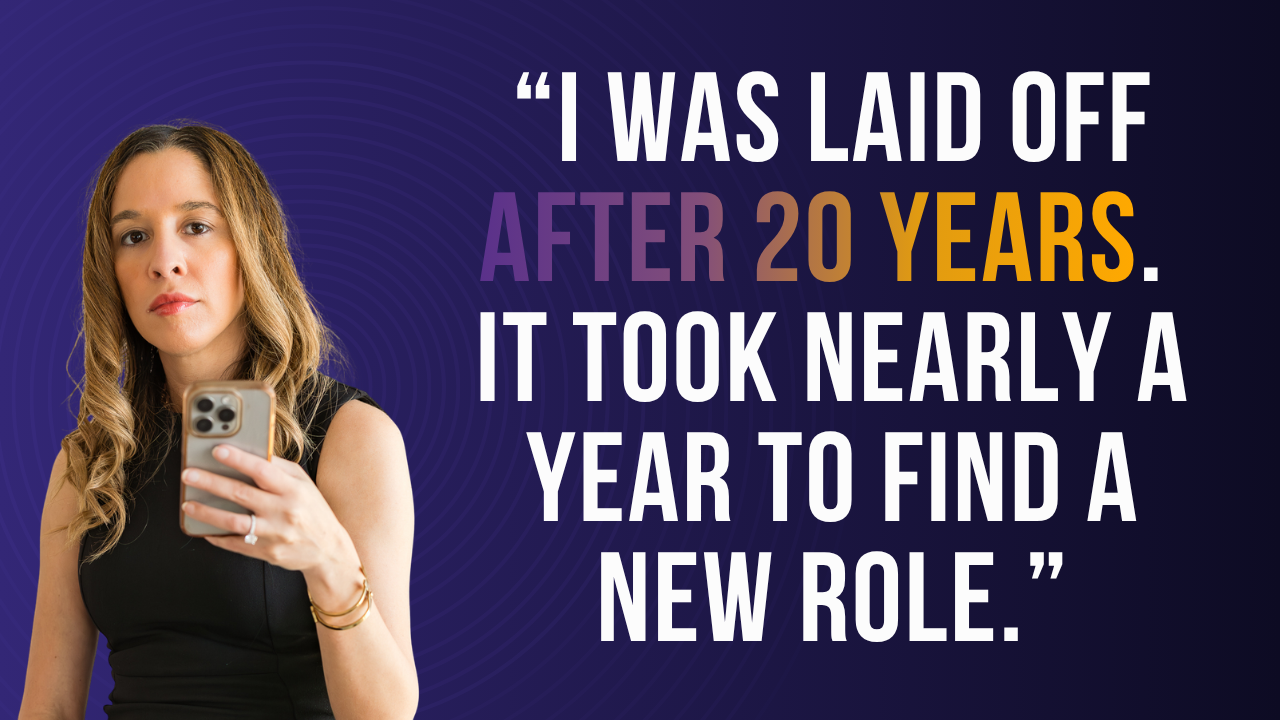
"I was laid off after 20 years at one company. It took me nearly a year to find a job, and it wasn't through a job board."
I want to sit with that headline for a moment before I go anywhere near strategy or methodology. Because the executive who wrote it is not an outlier. They are not a cautionary tale. They are the median experience of every senior professional navigating this market right now who has not yet made the shift I am going to describe in this article.
Twenty years of experience. Nearly a year of silence. And the breakthrough came not from the posted market, but from somewhere else entirely.
That is not bad luck. That is the market working exactly as it is designed to work.
The problem is that most executives are still using a strategy that was designed for a completely different market. And the gap between the strategy they are running and the market that actually exists is costing them months, in some cases years, of outcomes their track record deserves.
The market has split. Most executives are competing in the smaller half.
Here is the reality of the executive opportunity market in 2026 that almost no one says out loud clearly enough for it to land.
It has split into two markets.
The first market is the one most executives are competing in. Posted roles. Job boards. Application systems. ATS screening. The 20 percent of executive opportunities that get publicly announced and immediately flooded with applications from every executive who sees the same listing.
The second market is the one that filled the role for the executive in that Business Insider headline. The 80 percent of executive opportunities that are never posted anywhere. That exist in conversations between decision-makers about problems they need solved. That get filled through relationships, through direct dialogue, through the kind of presence built over months of being consistently visible to the right people before urgency creates the opening.
The executives climbing right now are almost entirely operating in the second market.
The executives waiting for the right posting, optimizing their profile, submitting applications, and wondering why the market is not reflecting what they know they are worth, are almost entirely operating in the first.
And here is the data point that makes that difference visceral.
The cold application success rate at the executive level is approximately 0.1 percent. Not one percent. Point one percent. For every 1,000 applications submitted into the posted market, roughly one produces a closing conversation.
The executives spending eight hours a day submitting applications are running a strategy with a 0.1 percent success rate and wondering why the results are not proportional to the effort.
They are not wrong to work hard. They are working hard in the wrong market.
The qualification trap
I want to name something specific that I see in almost every executive I work with at the beginning of our relationship.
They believe the problem is that the market has not yet fully assessed their qualifications.
They are optimizing to be better understood. More clear. More visible. Better positioned relative to the standard framework of how executives are evaluated.
They are adding certifications. Refining summaries. Attending networking events. Requesting informational conversations. Following up more diligently. Doing everything the career development industry told them to do.
And the market stays quiet.
Not because they are not qualified. Because qualification is not the bottleneck.
This is the positioning gap nobody names.
The executives who are getting pulled into rooms right now are not more qualified than the ones who are not. They have not worked harder. They have not accumulated more years of experience. In many cases, the executive who is not getting the call has a stronger track record than the one who is.
What they are missing is not more qualification. It is a completely different relationship with how they position the qualification they already have.
What background-first positioning actually does to your results
The Career Evolved Method spends significant time on this distinction because it is the single shift that produces more change in executive outcomes than anything else in the methodology.
Most senior executives lead with their background. And the instinct is completely understandable.
The background is what they built. It is what they are proud of. It is what got them here. Decades of experience, accumulated across significant organizations, through real challenges and real results.
The instinct to lead with that background makes perfect sense.
Here is what it does in a room.
It gives the buyer a list.
A list of where you have been. What you have held. Who you have worked for. What titles you have accumulated.
And a list is a static thing. A list invites comparison. A list asks the buyer to do the work of connecting your history to their need. A list sits there waiting to be evaluated against every other list from every other qualified executive who is also in the process.
The C-suite leader sitting across from that list is not reading it with excitement. They are scanning it with one quiet question running underneath everything.
Does this person actually understand my problem?
A list does not answer that question. A list describes a person. It does not describe a solution to an expensive problem the buyer is actively losing sleep over.
And in the Trust Recession, where AI has produced identical polished lists for every executive competing in the same process, the list has become nearly invisible. Not because yours is bad. Because they all look the same.
What the Trust Recession changed that nobody is saying clearly enough
I named the Trust Recession before it entered the mainstream conversation, and I want to explain what it actually means for executive positioning because the noise around it has simplified it in ways that miss the point.
AI flooding every channel with polished profiles did two things simultaneously.
First, it raised the floor of qualification. Every executive on paper is now keyword-optimized, professionally formatted, and indistinguishable from every other executive who used the same AI to produce their positioning materials.
Second, it made decision-makers profoundly skeptical. They cannot tell what is real anymore. Polished profiles that look impressive and reveal nothing on the second conversation. Reference checks that glow and produce hollow results. The senior professionals who are now responsible for significant hiring decisions have been burned enough times that they have changed how they operate.
They get slow. They get skeptical. They demand to see someone operate before they commit. They want proof, not polish. They want substance, not surface.
In the Trust Recession, the executives still trying to win by perfecting the surface are losing to the executives willing to be real, specific, and known as trusted humans inside the rooms where decisions get made.
This is why the Business Insider executive found the role through something other than a job board. The job board is surface. The relationship that produced the opportunity was substance.
Solution-first positioning: what it actually is and what it produces
Solution-first positioning is not a rebranding of your background. It is a philosophical shift in how you understand and communicate your value.
You stop telling the market what you are. You start telling the market what you solve.
The difference in practice is visceral.
Background-first: "Senior Vice President of Operations with eighteen years of experience managing complex supply chain environments across Fortune 500 and high-growth organizations."
That sentence describes a person. It gives the reader a list. It invites them to compare you to every other senior operations executive they have spoken to.
Solution-first: "I work with mid-market companies that are scaling faster than their operations infrastructure can support. That gap typically costs fifteen to twenty points of margin annually. I close it."
That sentence describes a solution to an expensive problem.
The C-suite leader with a $50 million revenue leak in their operations is not looking for a former VP of Operations. They are looking for someone who will close the leak. And when they read a document, or sit across from a person, that names exactly the problem they are living with and connects it to a transformation the executive has produced before, the evaluation is over before the conversation formally begins.
That is what solution-first positioning produces.
The story I keep coming back to
I want to tell you about Adi, because his story demonstrates something I want every senior executive reading this to understand is possible.
Adi is a physical security professional. Not cybersecurity. Physical security. A deep, narrow specialization built across 30 years of direct experience. He had spent 23 of those years inside one large corporation, building an outstanding tenure. When that chapter ended, he found himself trying to navigate a market he had not been inside for over two decades.
He started where most senior executives start. The traditional path. Applications. Submissions. The conventional playbook.
Some of it produced movement. Most of it did not.
He came to Career Evolved skeptical, the way every experienced executive should be. He had heard pitches before. He knew the difference between words and actions. What he wanted was a different approach and a real set of tools.
The shift that changed everything happened inside the solution-first positioning work.
He stopped asking where he wanted to work. He started asking what problems he wanted to solve. He stopped rehearsing answers about his background. He started having genuine conversations about what physical security gaps cost organizations when they went unaddressed. He stopped leading with what he had done. He started leading with how he could help.
The result was not a role he applied for and was selected from among competitors.
Vanguard created a role that had not previously existed. Senior Advisor for Global Security. Built around the specific problem Adi demonstrated, through six months of conversations with multiple department heads, that he was the irreplaceable person to solve.
The role did not exist before he walked in.
It exists because of how he showed up.
That is not luck. That is solution-first positioning working exactly as it is designed to work.
The other story I want to put next to Adi's
Ololade came to Career Evolved committed to landing a Fortune 500 W-2 role. That was the plan. The destination she had been building toward. The form of success she had been given language for.
She went through the identity work. The positioning work. The honest examination of who she was outside the titles and organizations she had been associated with.
Somewhere in the middle of that work, the destination shifted.
Not because the original plan was wrong. Because the solution-first positioning work revealed something larger. The specific problem Ololade was built to solve did not fit inside a single organization's structure. It fit inside a portfolio. Multiple organizations. Multiple decision-makers. Multiple relationships she was uniquely positioned to serve.
She walked out of Career Evolved as the founder of a consulting practice advising boards, founders, and investors on portfolios exceeding $250 million in managed capital.
That outcome was not in the plan she arrived with.
It was in the person she had always been.
This is the part of solution-first positioning that almost no one in the industry names.
When you position yourself correctly, you do not just unlock the destination you came in for. You often reveal the destination you should have been pursuing all along.
What the positioning gap looks like from the other side of the table
I have been in conversations with CEOs, founders, and board members this year who are actively trying to solve senior leadership problems.
Real organizations. Real urgency. Real budget.
When I ask how they are approaching the search, the answers are consistent.
They are reaching out to people they already know. They are asking for introductions from people they trust. They want someone who comes recommended before a formal process ever starts.
They are not going to a job board. They are going to their network.
And the people who get the call are not the ones with the best-optimized profiles. They are the ones who have been showing up in the right conversations with the right insight before the urgency created the opening.
The positioning gap is not a gap in qualification. It is a gap in presence.
The executives who are not getting the call are not invisible because they are unqualified. They are invisible because they have been absent from the conversations where decisions are forming. Because they have been competing in a posted market that the decision-makers are not using. Because they have been describing their background to buyers who are scanning for a solution to a specific expensive problem.
What the shift actually requires
I want to be honest about what solution-first positioning requires, because the industry tends to make it sound like a rewrite.
It is not a rewrite.
It is an excavation.
The specific expensive problem you solve is already inside your career. It is in the pattern of what you have been called to address, what you have delivered that produced the most organizational impact, what problems you have solved repeatedly that organizations would pay significantly to solve right now.
The work is to find it, name it with precision, build the language that communicates it to the people who have it, and then deploy that language consistently across every conversation, every touchpoint, and every relationship in the hidden market where the real opportunities live.
That work cannot be outsourced to a template. But it can be supported by a methodology.
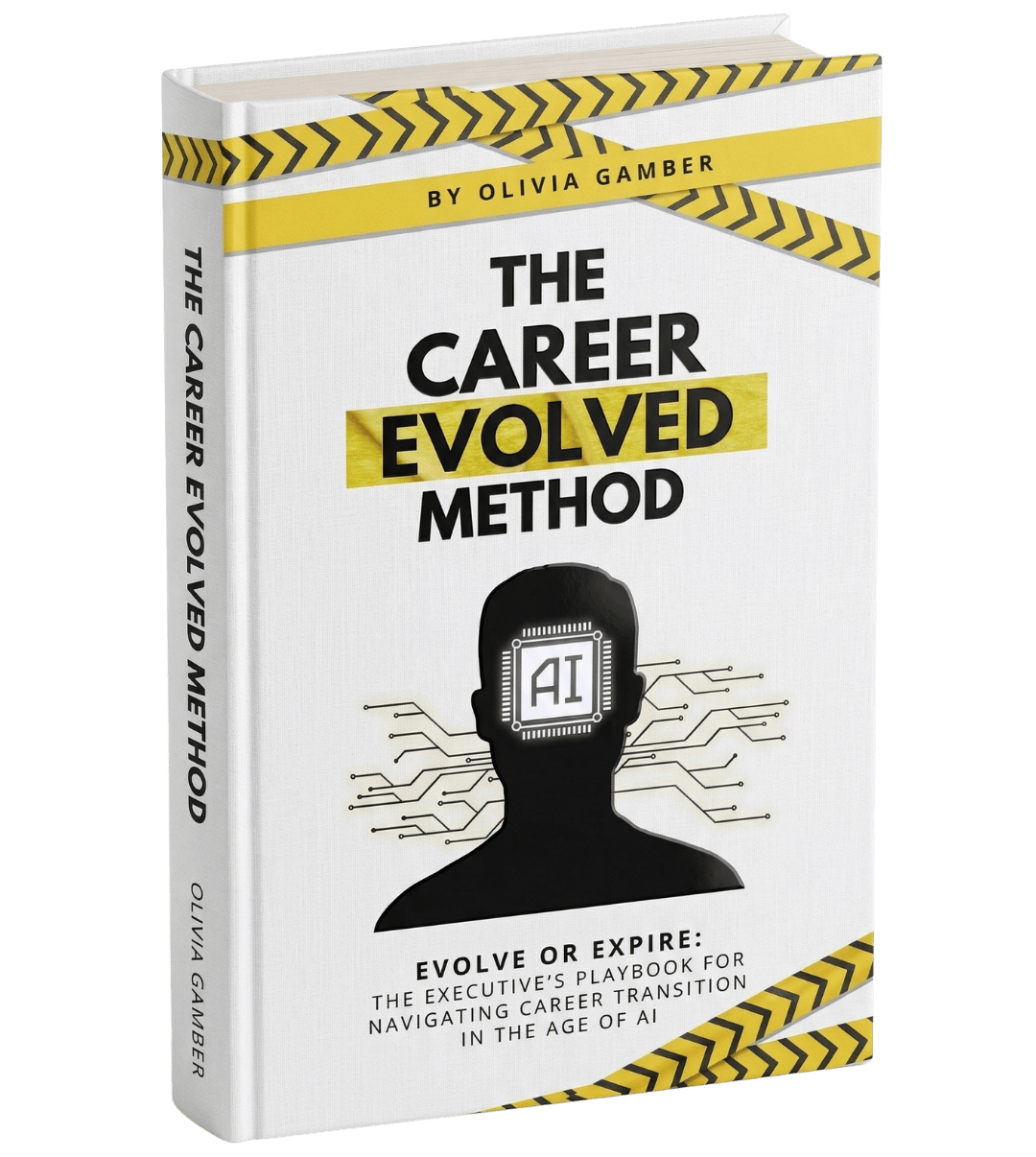
The Career Evolved Method is built on this work. The eight pillars address every layer of the gap between where most executives are positioned and where the market actually rewards them.
And it starts where it has to start.
Not with the document. Not with the outreach. With the identity underneath everything.
Because the positioning is always downstream of who you believe yourself to be.
When you change what you believe about the value you carry, you change how you communicate it. When you change how you communicate it, you change who responds. When you change who responds, you change the quality of every outcome.
The executives getting pulled into rooms right now made that shift.
Some made it deliberately, with a methodology designed for it.
Some stumbled into it after enough silence made the old approach impossible to keep defending.
But every one of them made it.
The question is not whether the market can produce that outcome for you.
It already is. For someone who is positioned correctly.
The question is whether you are going to be that person before the next opening closes.
📥 Download The Career Evolved Method™ free at www.careerevolved.com/thecareerevolvedmethod
Book your free 20-minute diagnostic at www.careerevolved.com/schedule
Olivia Gamber is the Founder and CEO of Career Evolved and creator of The Career Evolved Method™. She has spent over a decade working with executives at the intersection of identity, positioning, and a market that rewards the ones who stop leading with their background and start leading with their value. Career Evolved is not a career coaching company. It is a transformation business.
#OliviaGamber #CareerEvolved #CareerEvolvedMethod #ExecutivePositioning #SolutionFirstPositioning #ExecutiveLeadership #HiddenMarket #TrustRecession #EvolveOrExpire #PremiumProduct #ExecutiveCareer #IdentityFirst #CareerEvolvedReviews #ExecutiveCoaching #ExecutiveMindset