When the Title Was Gone, She Found Out Who She Actually Was. Most Executives Never Get That Far. Olivia Gamber
Jun 24, 2026By Olivia Gamber, Founder & CEO of Career Evolved
Amy Frentz spent thirteen years at one company.
Thirteen years building something that mattered. Leading teams that trusted her. Developing a brand, an identity, a reputation inside a specific building with specific people who knew her at her best.And then it ended.
Not in a dramatic way. Not in a way that anyone could point to as a failure. The transition was, by most professional measures, a dignified one. She saw it coming. She prepared for it.
And still, in her own words, what she was not prepared for was the grief.
"I think that's what probably caught me most off guard was just the emotional attachment I had to my former title, my former teams, my former colleagues, my former work product, the brand I had built with internal people, clients, customers. You name it."
She was not describing a job loss.
She was describing the loss of a self.
The Thing Nobody Names
I want to talk about something that exists in the executive experience at a scale that is almost impossible to overstate, and that the professional world has almost no language for.
Career grief.
Not burnout. Not disengagement. Not the frustration of being overlooked or underpaid. Not the transition anxiety that coaches have frameworks for addressing.
The actual grief that comes when something you built your identity around is taken away.
The executive who gave a decade to a culture she believed in and arrived one morning to find the culture had been replaced by a spreadsheet. The VP who built a team over seven years and watched it be restructured away in a single announcement. The CEO who stepped down and discovered, in the silence that followed, that he had no idea who he was outside the title.
All of them experienced a version of what Amy described.
And almost none of them were given permission to name it as what it was.
Because the professional world does not have a container for grief. It has frameworks for resilience. It has strategies for pivoting. It has coaches who will help you update your positioning document and optimize your outreach and reframe your narrative.
Nobody sits with you in the grief first.
I want to do that today.
What Career Grief Actually Is
Career grief is not what happens when you lose a job.
Losing a job is an event. It has paperwork. It has a date. The professional world has systems for it, outplacement, severance, the carefully worded LinkedIn update that suggests intentionality while the real story plays out in private.
Career grief is what happens when you lose a version of yourself that was attached to that job.
This distinction matters because it changes everything about how you move through it and what you need on the other side.
The loss of a job can be addressed with tactics. Better positioning, stronger outreach, improved strategy. These things help and they matter.
The loss of self requires something different. It requires acknowledgment first. Honoring what was lost before replacing it. Feeling the full weight of what was given, what was built, what was loved about the work, before moving forward as though none of it happened.
Most executives skip this step. Not because they are incapable of it but because the professional world does not give them permission to take it.
Amy gave herself a deadline instead.
"I said you have to pull yourself together because no one's coming to save you, and you've got this, figure this out."
That sentence is both the most human thing I have heard an executive say and the most revealing thing about the culture that produces it.
She was right that no one was coming. That is true. And she was also carrying something that deserved more than a deadline.
The grief she was moving through was real. The identity she had built over thirteen years was real. The loss of it was real.
And it required, at minimum, the dignity of being named.
What Gets Lost and Why It Matters
The clinical conversation around career grief identifies several distinct threads of loss that happen simultaneously, which is part of what makes it so disorienting. Most executives experience all of them at once without being able to separate them.
The loss of role is the most obvious. The function, the title, the organized purpose that gave the day structure and told the world how to categorize you. Without it, mornings feel wrong. The calendar is empty in ways it has not been in decades. The question of what you are for, previously answered automatically by the role, suddenly requires a real answer.
The loss of community is often more painful than the role itself. The team. The colleagues. The daily relationships that provided belonging, challenge, and the specific intimacy that forms between people who have navigated hard things together. Amy named this one explicitly. Not just the title. The teams. The colleagues. The work product. The brand built with real people over real time.
The loss of purpose structure is subtler. The way the role provided a ready answer to the question of what you are building. The organized meaning that came with the position. The mornings with a reason built in. Without it, the executives who were most driven by purpose often feel the most unmoored.
And then there is the loss of identity. The deepest thread and the most quietly destructive.
The belief, formed over years of accumulation, that who you are is substantially what you do. That the value you carry lives in the role that holds it. That without the container, the contents are uncertain.
Amy arrived at this question honestly and said it in a way I have not forgotten.
"What else am I? Who am I without this job?"
That question is not a crisis. It is an invitation.
The executives who hear it as a crisis perform their way past it. They get busy. They take the next thing that is fine. They optimize the document and run the outreach and pretend the identity question was answered rather than opened.
The executives who hear it as an invitation do something harder and more important. They sit with it. They do the real work of finding out who they actually are when the title is not there to tell them.
Amy did both. She gave herself a deadline. She pulled herself together. And then she did the identity work. Not around the grief. Through it.
Why High Achievers Are the Most Vulnerable
This is the part that surprises people.
The executives who struggle most with career grief are not the ones whose careers were most disrupted. They are not the weakest performers or the ones who were least invested.
They are the ones who were most invested.
The high achiever who showed up fully. Who cared deeply. Who led in a way that was genuinely an expression of who they were. Who invested beyond what the job required because the work actually mattered to them.
That executive has more to grieve. Not because they were less resilient. Because they were more present.
And here is the part that is almost cruel if you allow yourself to see it.
The organizations that benefited most from that full presence, that asked for everything the executive had and received the fullness of their investment, have no protocol for honoring the cost of giving it.
The executives who gave the most are carrying the heaviest grief. And the market, which is already demanding that they show up ready and positioned and forward-facing, has no patience for the weight of what that investment cost.
So they perform ready.
They tell everyone things are fine. They update the profile. They show up to networking events and say they are excited about what is next. They prepare the narrative that protects their dignity while the real story plays out in the quiet of 2am when the performance is finally off.
That performance is not strength. It is isolation dressed as professionalism.
And it costs more than people know.
What Performing Recovery Actually Produces
Here is what I have watched happen to executives who perform recovery before they have actually recovered.
They bring the performance into every closing conversation.
Not as sadness, which would be honest and therefore connectable. As something slightly off. A performance of certainty where real certainty should be. An energy that reads to the buyer, before anything conscious is processed, as someone who is not fully present in what they are offering.
Buyers feel it. They cannot always name it. But they feel it. And they respond accordingly.
The executive who has not yet grieved what was lost is trying to build what is next from an incomplete foundation. The identity work cannot fully land because there is unprocessed grief underneath it. The positioning cannot feel real because the person doing the positioning is not yet fully present in the loss.
I have sat with executives who have spent six, seven, eight months in transition working hard on every external piece of the methodology. Outreach. Positioning. Conversations. All of it running correctly.
And something underneath is frozen.
The grief is still there.
It did not expire because they gave themselves a deadline.
It went underground. And it is the thing showing up in every room as the subtle energy that makes buyers feel something is slightly off.
The breakthrough always starts with naming it.
The Specific Language That Changes Everything
Amy said something on her call that I believe is the most accurate description of what the identity work actually provides.
She said Career Evolved gave her "the language for what I was feeling and then what was the language that I need to change in my head mentally and emotionally to get to the outcomes that I wanted."
Two kinds of language. The language for the grief. And the language for the next chapter.
Most executives in transition have neither.
They have the professional vocabulary of transition. Moving on. Exploring new opportunities. Excited about what is next. This language is designed to protect rather than to process.
They do not have language for the grief because the professional world never gave it to them. Nobody told them it was grief. Nobody named the specific threads of loss, the title, the community, the purpose structure, the identity, and said: all of this is real, all of this deserves to be honored, and you cannot build what is next until you have stood fully in the weight of what was.
And they do not have language for the next chapter because the next chapter requires a question they have never been asked.
Not what do you want in a role. Not what is your target compensation or your ideal company size or your preferred industry.
Who are you when the title is not there to tell you?
That question, answered honestly, is the beginning of everything.
What Amy Found on the Other Side
Amy gave herself a deadline. She pulled herself together. She found Career Evolved. And then she did the real work.
Not the positioning work. Not the outreach work. The identity work. The honest reckoning with who she was outside the building that had held her for thirteen years.
What she found was extraordinary.
Not because it was new. Because it had always been there, underneath thirteen years of a specific title at a specific company, waiting to be excavated.
The head of operations at one of the top ten employers in the country. A team of three hundred. Light. Joyful. Her words.
And still in transition. Still growing. Still being stretched. Because Amy understood something that the executives who rush past the grief never fully grasp.
The transition does not end the day you accept the offer.
The transition is the permanent practice of becoming.
The grief, processed honestly, is not the end of the story.
It is the clarification that makes the next chapter possible.
What I Want to Say to You Directly
If you are carrying something right now that you have been calling something else, being stuck, being strategic, waiting for the right moment, being responsible, I want to ask you a direct question.
Is it grief?
Is there something you have not allowed yourself to fully feel because the professional world did not give you permission to feel it? A version of yourself that you gave everything to that deserved to be honored before you tried to replace it?
You do not have to perform recovery before you have actually recovered.
You are allowed to grieve.
And when you are ready, not when the market pressures you into being ready, but when you actually are, that grief becomes the most clarifying fuel you have ever had.
Because the executives who do this honestly, who feel the loss fully rather than performing past it, do not just land better roles or build better practices.
They build next chapters that actually fit who they are.
Not the version that fit the last role.
The real one.
That version closes differently. Negotiates differently. Walks into rooms differently.
Because it is not performing anything.
It is just fully present.
And in a market full of people performing fine, presence is the rarest and most powerful thing you can bring.
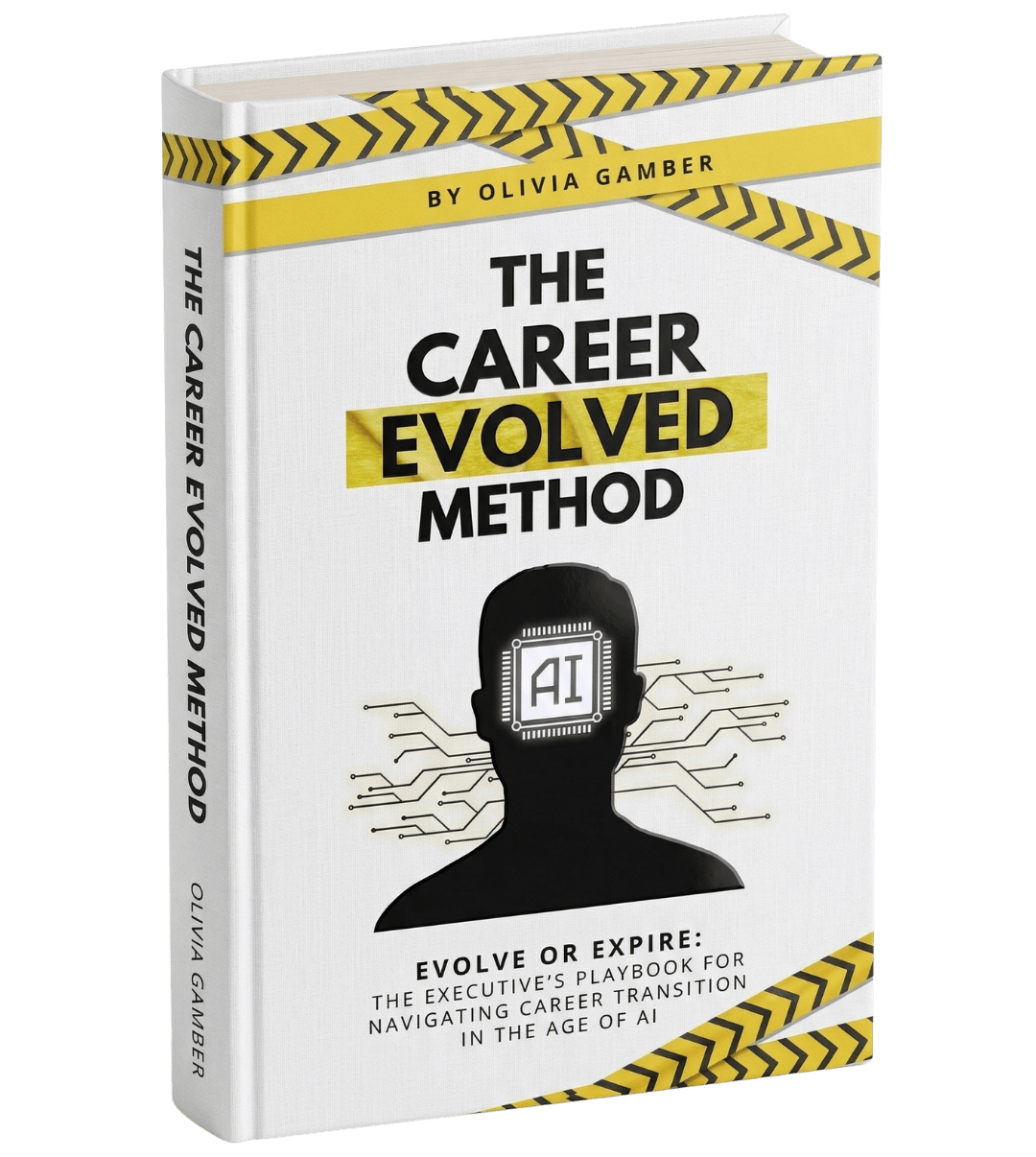
📥 Download The Career Evolved Method™ free at www.careerevolved.com/thecareerevolvedmethod
Book your free 20-minute diagnostic at www.careerevolved.com/schedule
Olivia Gamber is the Founder and CEO of Career Evolved and creator of The Career Evolved Method™. She has spent over a decade working with executives at the intersection of identity, grief, and reinvention. She was among the first voices in the executive space to name career grief publicly and to build a methodology that addresses the emotional root causes of career stagnation before addressing the tactical ones. Career Evolved is not a career coaching company. It is a transformation business. And that distinction is the whole point.
#OliviaGamber #CareerEvolved #CareerEvolvedMethod #CareerGrief #ExecutiveLeadership #IdentityFirst #ExecutiveMindset #EvolveOrExpire #ExecutiveTransition #CareerReinvention #FaithOverFear #ExecutiveCoaching #TrustRecession #CareerEvolvedReviews #ExecutiveIdentity