You Have Been Doing Everything Right. That Is Exactly Why Nothing Is Working.
Jun 25, 2026I want to talk to the executive who has been doing everything they were told to do.
Applying consistently. Optimizing the profile. Following up on conversations that went quiet. Connecting with people who said they would keep an eye out. Waking up early to check for new postings. Going to bed at night wondering what they are missing.
Doing everything right.
And hearing nothing back.
If that is you right now, I need you to hear something that most people in this industry will not say.
The silence is not about your qualifications.
It is not about your experience. It is not about the market being against you specifically. It is not even, mostly, about your positioning document.
The silence is happening because you are competing in a system that was never designed to find the best person for the role.
It was designed to manage volume. And what it is producing, for the executive who is doing everything right inside that system, is exactly what you are experiencing.
Nothing.
What is actually happening to your applications
I want to give you the real numbers because the industry rarely does.
83% of executive applications are screened by AI before a human reads a single word. Not filtered a little. Screened. Gone before anyone gets to find out you were there.
The applications that do make it through enter a stack. A stack that in many cases contains hundreds of other documents, all keyword-optimized, all professionally formatted, all representing executives who have done exactly what you have done to prepare.
The success rate for cold applications at the executive level in 2026 is approximately 0.1%.
Not 1%. Point one percent.
For every 1,000 applications sent, roughly one produces a closing conversation.
I am not sharing these numbers to demoralize you. I am sharing them because the executive who understands them stops blaming themselves and starts asking the real question.
Why am I in a system with a 0.1% success rate when 80% of the opportunities I want are not in that system at all?
The system you are in vs the market where opportunities live
Here is the thing about the executive opportunity market that changes everything once you understand it.
It is not one market. It is two.
The first market is the one you are in. Posted roles. Job boards. Application systems. ATS screening. The 20% of executive opportunities that get publicly announced and immediately flooded with applications from every executive who sees the same posting you do.
The second market is the one most executives do not know how to access. The 80% of executive opportunities that are never posted anywhere. That exist in conversations between decision-makers about problems they need solved. That get filled through relationships and direct dialogue before a role is ever created, before a description is ever written, before anyone outside that conversation knows an opportunity exists.
The executives closing $200K to $500K+ opportunities right now are not better qualified than you.
They are operating in a different market entirely.
And the reason most executives never access that second market is not because they lack the network or the experience or the capability.
It is because they are running a strategy built for the first market. A strategy of optimized applications and keyword-dense documents and volume-based submission that produces, in the first market, a 0.1% success rate, and in the second market, nothing at all.
Because the second market does not respond to applications.
It responds to presence.
Why the document you perfected is not the problem and not the solution
I want to address something directly because it is the conversation I have on almost every diagnostic call.
The executive who has been applying for months has almost always spent significant time on their positioning document. They have optimized it. Revised it. Had it reviewed. Paid for professional help in some cases.
And they are still getting no traction.
So the natural conclusion is that the document needs more work. That if they could just get the document right, the market would respond.
The document is rarely the primary problem. And it is never the primary solution.
Here is why.
Decision-makers at the C-suite level scan a document in approximately eight seconds. In those eight seconds they are not evaluating your formatting or your keyword density or your bullet structure. They are looking for one signal.
Does this person understand my world?
A background-first document, a document that leads with where you have been and what you have managed, cannot answer that question in eight seconds. It gives the reader a list and asks them to do the work of connecting your history to their need.
A solution-first document answers it in the first three lines.
Not by describing your background. By naming the specific expensive problem the buyer is living with and connecting it directly to the transformation you produce when you solve it.
That shift, from background-first to solution-first, changes what the document does in those eight seconds.
But it does not change the fundamental problem.
The fundamental problem is that the document is operating inside a market that was not designed to move it forward. And no document, however perfectly positioned, produces results when 83% of the applications carrying it are screened before a human reads them.
The document needs to be right. And then it needs to be operating in the right market.
What the executives who are moving right now are doing differently
I speak to hundreds of executives every week. I am on the ground floor of this market in real time.
And the executives who are moving fastest through this market share a specific set of behaviors that almost none of the executives who are stuck are running.
They have stopped applying and started building.
Not building a better document. Building presence in the conversations where the 80% market lives.
Specifically, they are running what we call the Consistent Connection Strategy. Thirty minutes a day. Five to ten intentional, value-led outreach moments per week. Not applications. Not mass connection requests. Targeted engagement with the specific decision-makers who have the expensive problems they solve, leading with insight and genuine interest rather than availability or need.
Every message ends with a specific question only that person can answer. Not "I would love to connect." A real question about their world that creates genuine conversational weight.
Done consistently over 90 days with the right people, this practice builds something the posted market cannot produce. A pipeline of warm relationships where your name is the first one spoken when a problem becomes urgent enough to act on.
The executives getting called before a role is ever posted are the ones who have been consistently present in the right conversations long enough that when urgency creates an opening, they are already the obvious answer.
That is not luck. That is a practice.
And it starts with understanding that the strategy you have been running, the one that is producing silence, is not a reflection of your value.
It is a reflection of the market you have been trying to operate in.
What the silence is actually telling you
I want to reframe the silence because most executives experience it as personal.
As evidence that the market has assessed them and found them lacking. As information about their worth rather than information about their strategy.
The silence is not personal.
The silence is the posted market doing exactly what it was designed to do. Processing volume. Filtering at scale. Producing a 0.1% success rate for everyone in it regardless of their capability.
The executives who are not hearing silence are not hearing from the same system you are submitting to. They are hearing from the second market. From decision-makers who know them, trust them, and reached out before the opportunity was ever formalized.
The silence is not telling you that you are not good enough.
It is telling you that you are in the wrong market.
And that is the most useful information you could have right now. Because it means the problem is solvable. Not by more applications. Not by a better document. By a different strategy, pointed at a different market, built on a completely different foundation.
That foundation starts with how you are positioning yourself.
Not the document. The philosophy behind it.
Solution-first. Problem-led. Specific enough that the right decision-maker reads it and thinks: this person already understands exactly what we are dealing with.
We built a free tool that creates that document.
But the document is one piece of the full methodology.
🔧 Start with the free executive positioning tool at www.careerevolved.com/ai-resume-tool
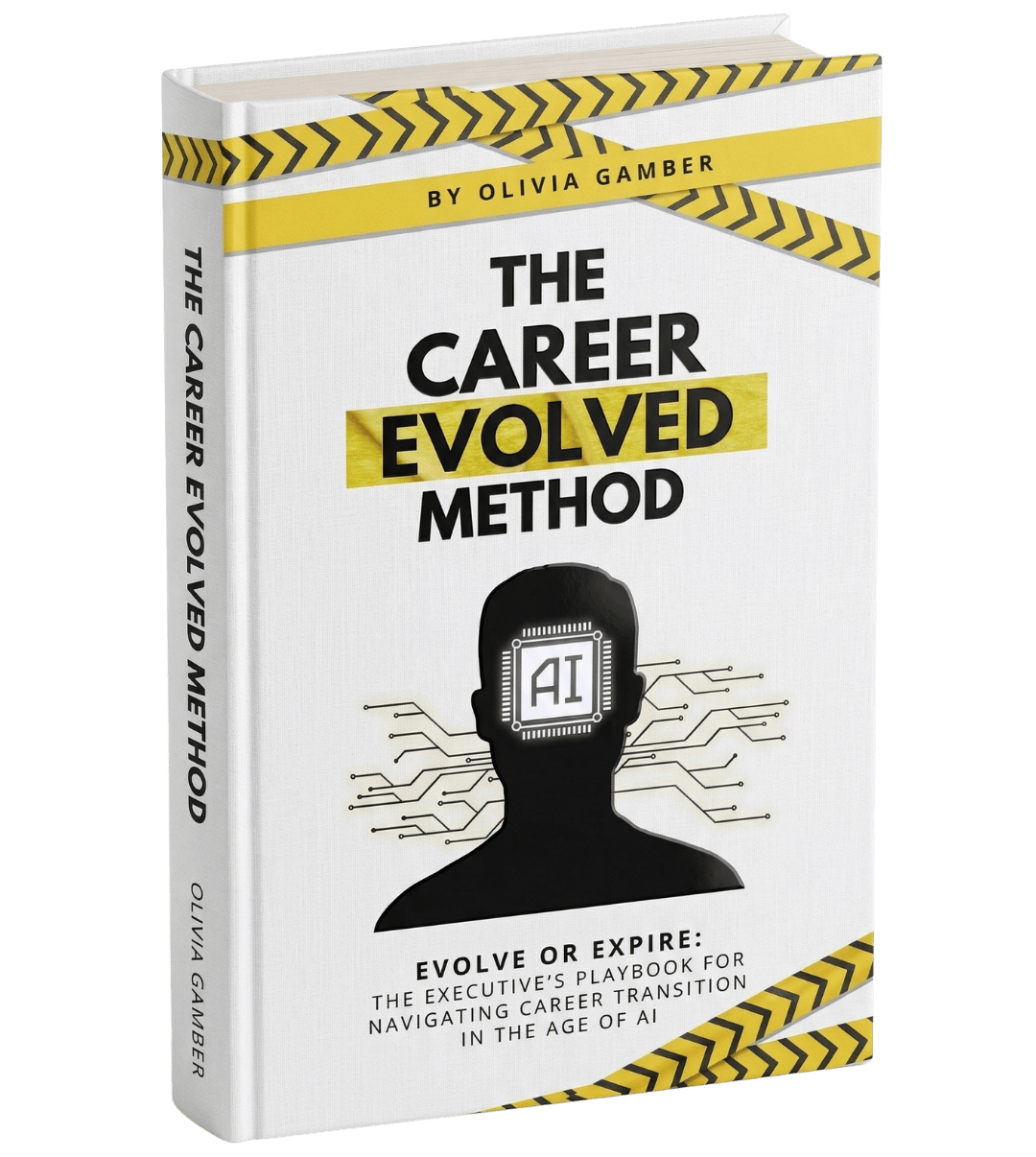
And if you want to understand the complete system that turns the document into a pipeline, the pipeline into conversations, and the conversations into the opportunities you have been building toward, that is what The Career Evolved Method™ is built to do.
📥 Download it free at www.careerevolved.com/thecareerevolvedmethod
Olivia Gamber is the Founder and CEO of Career Evolved and creator of The Career Evolved Method™. She has spent over a decade working with executives navigating the intersection of identity, strategy, and a market that rewards the ones who stop competing in systems designed to filter them out. Career Evolved is a transformation business. Not a career coaching company.
#OliviaGamber #CareerEvolved #CareerEvolvedMethod #ExecutivePositioning #ExecutiveLeadership #HiddenMarket #AIResumeTool #EvolveOrExpire #TrustRecession #ExecutiveCareer #CareerTransition #ExecutiveMindset #IdentityFirst #PremiumProduct #CareerEvolvedReviews